Visualizzazioni totali

venerdì 13 febbraio 2015

Update on Anderson Silva and Nick DIaz UFC Status, Dana White Comments !


The Nevada Athletic Commission hearing regarding punishment for Anderson Silva and Nick Diaz for drug test failures is scheduled for 2/17, and Hector Lombard may be added to that list. While not official, it is expected the result of the 1/31 main event fight that Silva had won via unanimous decision will be ruled a no contest.
Many are skeptical, and for good reason, that a test Silva took on 1/9 would not have results back by 1/31. Both the Nevada Athletic Commission and Sports, Medicine Research & Testing Laboratory in Salt Lake City, which did four different tests on Silva’s specimen, have stated the results did not come back before the fight.

What is notable is that this past week, the word got out that Jon Fitch failed a steroid test on 12/13.
California did not get an original report of the Fitch test failure until 1/15, and then ordered another test, which didn’t come back until 2/4. California used a different lab. In the case of Fitch, unlike with Silva, the fight had already taken place so the idea they were holding back the results to protect the fight is out the window.
However, Lombard failed a test in Nevada on 1/3 and the commission already had the positive result back on 1/13. However, the test was not reported until 2/10 because Nevada didn’t release the result. Lombard had been advertised for the 4/25 show in Montreal for a fight with Rory MacDonald until 2/10, when UFC pulled the fight from the show with no explanation at first. From a local standpoint for the Montreal market, MacDonald was the

biggest star on the show, although they’ve loaded that show up with fighters from Montreal. MacDonald is no longer going to be on the show and because there is really no opponent that makes sense for him. This may be a blessing in disguise, because if Johny Hendricks doesn’t beat Matt Brown on 3/14, or gets hurt in that fight, MacDonald would be the most viable opponent for champion Robbie Lawler, who was looking to fight in May or early summer.
MacDonald vs. Lombard was replaced on the show by Demetrious Johnson vs. Kyoji Horiguchi for the flyweight title. Horiguchi fell into the spot because Ian McCall lost to an oversized, John Lineker, Lineker is being moved to bantamweight for his fourth failure to make weight. Horiguchi (15-1), is Japan’s best shot currently as holding a UFC championship.

Lombard, 37, failed for desoxymethlyltestosterone, better known as DMT or Madol, (there is a hallucinogenic drug known as DMT, this is not the same thing), a steroid used to spike food supplements as late as 2010, before the FDA banned it. Lombard failed a test he knew about ahead of time, since it was taken the day of his victory over Josh Burkman. Lombard will join Silva and Diaz as far as their cases being held on 2/17 before the Nevada Athletic Commission.

Silva had a second set of tests done on 1/19, both blood and urine, and he passed, meaning that the two steroids had cleared his system. The report on the urine test came in on 2/5. The blood test, showing no HGH, came in on 2/2, although it was not released publicly until a week later.
While anything is possible, most likely being clean ten days after the first positive test would be a result of timing his cycle of the two steroids to clear before fight time and a cessation of use at around New Year’s, give or take a day. Silva and Diaz’s test results for performance enhancing drugs taken on the night of the fight had not yet come back.

In both cases, the commissions are using this as a learning experience because you can expedite test results so they came back in less than two weeks. The point being that whether or not one chooses to believe the story on Silva, there was so much money at stake, and the commission itself is funded by a percentage of the live gate plus $50,000 from the PPV revenue, so they are hurt financially as well for a canceled show. UFC pays for the out of competition drug testing for its athletes in Nevada.
Still, the commission has said that had they had the result back before the show, the match would have been canceled. What UFC would have done in that situation is a question, as they would have had to offer refunds of the live gate. Had they gone on with the show, because the show didn’t have a strong marquee undercard (really, the second strongest fight to the public was the Sara McMann vs. Miesha Tate fight that wasn’t even on the PPV), a lot of refunds could have meant an empty building. There were likely thousands of Brazilians who had flown in for the show. What they would have done for the PPV is another question.

The key point is if what is being said is accurate, this has been a learning experience and they can’t play the we didn’t get the results back in time card again for any test more than two weeks or so before the show itself.
Silva has maintained his innocence, saying that he doesn’t understand how he tested positive.
His manager, Ed Soares, released a statement from Silva, saying, “I’ve been competing in this sport for a very long time. This is my 19th fight in the UFC. I have been thoroughly tested many times and have never had a positive drug test. I have not taken any performance enhancing drugs. My stance on drugs is, and will always be, the same. I’m an advocate for a clean sport. I’m consulting with my advisors right now to explore all of my options and intend to fight this allegation and clear my name.”
Both Globo in Brazil and the UFC had decided to keep Silva as one of the coaches of the next season of The Ultimate Fighter Brazil, but it’s not happening as the Nevada Athletic Commission wouldn’t allow it. As noted last week, there is a precedent for that ruling, because a coach on a show filmed in Nevada needs a seconds license, and if somebody is suspended, they are unable to get licensed. The UFC had wanted Chael Sonnen and Michael Bisping to coach an American season on FX, but the Nevada commission wouldn’t license Sonnen due to a suspension in California in a drug testing violation.

Because the show airs on Brazil’s biggest network, and thus it needs to have millions of viewers weekly to be a success, the feeling was that it needs major celebrity firepower. Silva is one of the biggest celebrities currently in Brazil.
On 2/9, the UFC announced Antonio Rodrigo Nogueira as Silva’s replacement after the commission made its ruling.
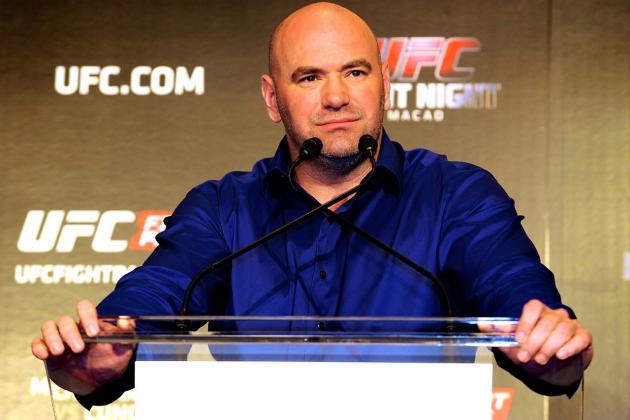
“Anderson Silva has been one of the greatest athletes this sport has ever seen,” said White. “He has had a long and distinguished career in mixed martial arts. In his nine years with the UFC, Anderson has never tested positive for a banned substance. In light of this, we want to ensure Anderson gets his due process and we will support him during his time. While this process plays out, Anderson will continue in his role as coach of The Ultimate Fighter Brazil. Of course, we will continue to monitor the actions of the Nevada State Athletic Commission.

“We fully support the Commission’s out-of-competition drug testing program, which we have financed when requested over the past two years. Testing of this nature is important to help keep this sport clean. The director at the laboratory in Salt Lake City has now explained the timing of Anderson’s test results and why the Commission and the UFC did not receive the results until February 3, after the fight.
“One all the results have been made public and the Nevada Athletic Commission has rendered its decision, we will respect the process and move forward accordingly.”
Globo told MMAFighting.com, “Keep Anderson on TUF until all the results are released and the Nevada State Athletic Commission has made its decision, it was a decision made in agreement with UFC.”

After the ruling, the UFC announced, “The UFC and Globo, the show’s Brazilian broadcaster, respect the Commission’s decision, which will allow Silva to focus his attention on the matter before the Commission. Anderson Silva has been an amazing champion and a true ambassador of the sport of mixed martial arts and the UFC will continue to support him as this process unfolds.”
The show had started filming on 2/2 in Las Vegas, so Silva had just started filming as coach when the test results came in. Silva will be in the first few episodes as coach before both
Nogueira Brothers (Antonio Rogerio Nogueira will be the leading assistant coach) will take over the team, in coaching against a team led by Mauricio “Shogun” Rua. Nogueira and Rua will not fight at the end of the season.

As noted last week, some have claimed that Silva doing steroids would make sense in aiding his recovery from a broken leg suffered on December 28, 2013. However, Drostanolone and Androstane are not steroids used for the healing process, but drugs used to aid in maintaining muscle while on a heavy diet. Human Growth Hormone would be one of the drugs likely used to heal a broken leg, which is virtually impossible to reliably test for, and whatever drugs were or weren’t used for repairing his injury would have been taken in early 2014. The two drugs in question, to show up on a test that was administered on 1/9, would have both had to be used later than mid-December.
The case of Diaz is even crazier in some ways, because few knew it, but Diaz came very close to not being allowed to fight.

Diaz had not applied for a license in Nevada during almost all of the promotion of the fight. Because of his two previous test failures and suspensions for marijuana use in 2007 and 2012 in Nevada, the commission wouldn’t license him until he submitted a clean drug test.
According to Cesar Gracie, Diaz has taken several drug tests to be submitted, but in every case, he had failed for marijuana. He wasn’t able to pass a test, the results which he then provided to the commission, until a few days before the fight.

“It’s not an anomaly,” said Bob Bennett, the commission Executive Director to MMAFighting.com regarding a main event fighter not being licensed until a few days before the fight. “We do get them (applications) at the last second. We’d prefer not to, because it creates problems. But don’t think we didn’t contact the promoters. We did contact the promoters. We said, `We need a clean bill of health from Nick or he isn’t fighting.’”
Diaz’s license application came in 1/28, the Wednesday before the Saturday of the fight. The only notable thing on his license was that he has two DUI cases in California pending, one from November 28, 2013 and the other from September 6, 2014.
The key to the Diaz test failure was the amount of marijuana in his system in his test taken the night of the fight.

Generally, a positive test for marijuana would be 15 nanograms per milliliter (ng/mL). Until 2013, the Nevada commission would consider anything under 50 ng/mL as a negative. In 2013, after lobbying from the UFC and Marc Ratner, who argued that times have changed in regard to the public’s perception of marijuana, noting its legal in several states, and the commission raised the level to 150 ng/mL at that time. When tested positive after the Gomi fight in 2007, his level was 175 ng/mL, but his level after the Silva fight was 300 ng/mL. Since Diaz was able to provide a “clean” (as in under 150 ng/mL) test a few days before the fight, and to come back with such a high number, it would indicate substantial usage very close to fight time.

While Gracie claimed Diaz did not smoke after the initial test, and blamed the high reading on exertion of the fight affecting the test result, Bennett claimed that the test result showed it was obvious that after he was able to provide a negative test, he went back to smoking again.

Update on the possibilities for the Main Event of WrestleMania 31 !!


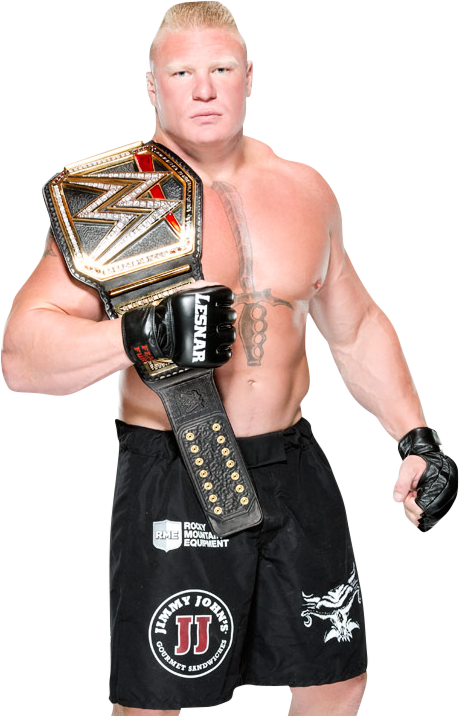
WWE seems to have three choices for a WrestleMania main event right now, the originally planned Brock Lesnar vs. Roman Reigns match, what appears to be the current plan of Lesnar vs. Reigns vs. Daniel Bryan in a three-way, or Lesnar vs. Bryan.

Those who have to know where things are going because this is a major event with a lot of publicity that needs to be in place, were told this past week that the Lesnar vs. Reigns match is being changed to a three-way. The reality is, that still could change until the 2/22 show in Memphis, where they have to come up with a finish for Bryan vs. Reigns to build the title match.
What’s notable is that after the Rumble, we were told that Vince McMahon was not considering changing from Lesnar vs. Reigns and that they had already done the three-way and Bryan win last year. But despite what is said publicly, the company often does react to what the crowds dictate, and this case is very similar to 1994, where Lex Luger was groomed to beat Yokozuna, and crowd reaction at the Royal Rumble led to that being changed to Bret Hart.

Lesnar vs. Bryan would be the strongest match, simply because Bryan is more popular than Reigns at this stage of the game. It would probably also be the best match.
Lesnar vs. Reigns is the weakest match, but it is the long planned match. It would still have Reigns, the guy who was scheduled to win the title, win it from a champion who has been booked strong, destroying both Undertaker and John Cena on big shows in 2014.
This week’s plan has the advantage of the outcome not being as predictable, particularly if Lesnar doesn’t sign a new WWE deal. But it also has major negatives, in the sense Reigns is likely to be booed more than the other two, and the original idea was that this show would kick Reigns off as the replacement for Cena as the company’s top babyface.

If the idea is that Bryan being in the Rumble was a mistake because it made Reigns a heel, the fact Reigns is doing the Fast Lane main event with Bryan, and if Bryan is in with him again at Mania, it’ll only make things worse. If the idea is to make Reigns a heel champion, having Bryan in the match may work the best, but it’s a gamble of whether it gets the right kind of heel heat. But that backfires because the whole idea was to create a new super babyface.
If Bryan was to win the title, it really would make more sense and be a better match, and mean more as a straight singles match. But they’d already booked Reigns to win the Rumble and may want to protect that idea to keep the value of the Rumble, the company’s No. 2 event of the year, strong.
Right now, Lesnar is a heel fans want to cheer for. Bryan is the most popular wrestler in the company, but also, for the first time, is clearly getting the beginnings of a backlash. Reigns is popular with girls and women, but the winning of the Rumble killed him as far as TV crowds
went. At the arenas over the weekend, Reigns and Bryan were almost completely cheered, although there were attempts to boo Reigns in Jacksonville.

Bryan & Reigns had a lot of interaction at television, with Reigns acting as the subtle, and even not-so-subtle heel, and being booed. On Raw, whenever Reigns would hit a big move, the crowd would cheer the move, and then boo him. It was back-and-forth on him all night whether he was cheered or booed, but definitely more boos and at no point did he feel like a guy who should be top face, and it was never the super fervent cheers and super loud boos like Cena would get before TV crowds where it’s clear he’s the superstar on the show even though a lot of people don’t like him.
One person live said Bryan was cheered for the most part, but when he issued the line about how everyone knows I’m the better wrestler, that it was, at best, 50% cheers. Whenever he interacted with Reigns, Bryan was the one cheered.

If Reigns is made as a heel champion, on the guise that the plan is to eventually turn him face, the feeling is he’ll need someone to talk for him. While Paul Heyman would be that person, provided Lesnar doesn’t stay, politically, I can’t see them giving Heyman the full-time top heel to manage given The Authority are the focal points of everything on television now, so a top heel champion who isn’t Lesnar is more likely to be affiliated with Stephanie and HHH.

Furthering the idea of the three way, is that Ziggler, who was to face Bryan as of a just over a week ago and they both started pushing it on Twitter, that both have dropped that direction. Ziggler was put into a tag team with Ryback on Smackdown, but on Raw they used both as singles.
Fast Lane, on 2/22 in Memphis, has the Reigns vs. Bryan match for the title shot as the main event, plus Rusev vs. Cena and Nikki Bella vs. Paige for the Divas title. Two other title matches being pushed are Bad News Barrett vs. Dean Ambrose for the IC title and Usos vs. Tyson Kidd & Cesaro for the tag team titles. They seemed on Raw to ease Seth Rollins & Big Show & Kane vs. Dolph Ziggler & Ryback & Erick Rowan, but then Show turned on Kane at the Smackdown tapings.

mercoledì 11 febbraio 2015

NJPW New Beginning in Osaka 2/11 Full Results, New Champions Crowned!!


New Japan Pro Wrestling “NEW BEGINNING in OSAKA”, 2/11/2015 [Wed] 17:00 @ BODYMAKER COLOSSEUM in Osaka
(1) Sho Tanaka vs. Yohei Komatsu
◆Winner: Sho (5:38) with a Boston Crab.
(2) Tiger Mask IV & Mascara Dorada vs. Manabu Nakanishi & Captain New Japan
◆Winner: Dorada (5:03) via pin-fall on Captain.
(3) Hiroyoshi Tenzan & Jushin Thunder Liger vs. Rob Conway & Chase Owens
◆Winner: Owens (7:53) following a Package Piledriver on Liger.
~ Owens with the win over the NWA World Jr. Champion in prelude to their match on 2/14.
(4) Tomoaki Honma vs. Kota Ibushi
◆Winner: Ibushi (12:15) with a Phoenix Splash.

(5) IWGP Jr. Tag Team Championship 3WAY Match: [39th Champions] Kyle O’Reilly & Bobby Fish vs. [Challengers] KUSHIDA & Alex Shelley vs. [Challengers] Nick Jackson & Matt Jackson
◆Winner: Matt Jackson (13:31) with the More Bang 4 Your Buck on KUSHIDA.
~ Champions fall on their 2nd title defense. Young Bucks become the 40th Champions.
(6) IWGP Jr. Heavyweight Championship Match: [70th Champion] Kenny Omega vs. [Challenger] Ryusuke Taguchi
◆Winner: Omega (13:58) with the Katayoku no Tenshi (One-winged Angel),
~ 1st successful title defense.

(7) Special 6 Man Tag Match: Kazuchika Okada, Toru Yano & Kazushi Sakuraba vs. Bad Luck Fale, Yujiro Takahashi & Tama Tonga
◆Winner: Okada (11:45) following the Rainmaker on Tonga.
(8) Special 6 Man Tag Match: Yuji Nagata, Satoshi Kojima & Tetsuya Naito vs. Shinsuke Nakamura, Tomohiro Ishii & YOSHI-HASHI
◆Winner: Naito (16:30) with the Stardust Press on HASHI.

(9) IWGP Tag Team Championship Match: [65th Champions] Hirooki Goto & Katsuyori Shibata vs. [Challengers] Karl Anderson & Doc Gallows
◆Winner: Gallows (16:26) following the Magic Killer on Shibata.
~ Champions fall on their 1st title defense. Anderson & Gallows become the 66th generation champions.

(10) IWGP Heavyweight Championship Match: [61st Champion] Hiroshi Tanahashi vs. [Challenger] AJ Styles
◆Winner: Styles (26:08) with the Styles Clash.
~ Champion falls on his 2nd title defense. Styles become the 62nd generation champion.

sabato 31 gennaio 2015

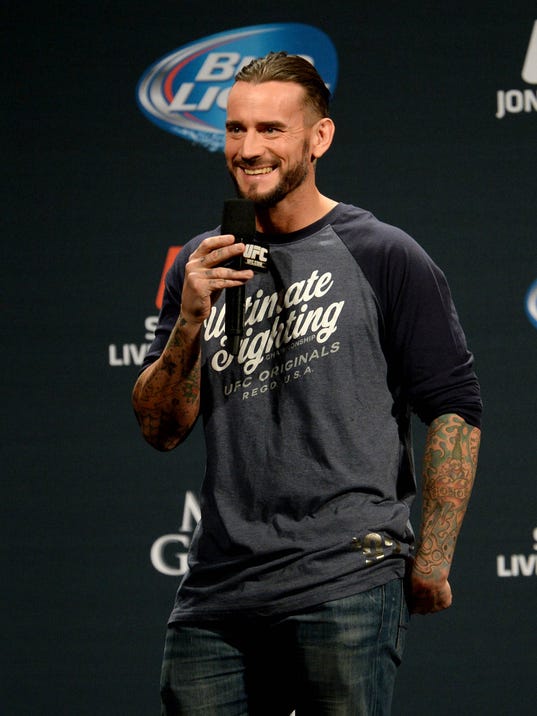
CM Punk First Opponent in UFC Update!


In an interview with ESPN on C.M. Punk’s first opponent, Lorenzo Fertitta said: “I think it has to be somebody with some level of credentials. It’s not just going to be some guy off the street. It’s going to be somebody who is a professional mixed martial artist–certainly somebody who the MMA media will recognize and know.” That’s weird because Punk’s first opponent should be someone with three or less fights and unless it’s an NCAA champ starting out type of guy, or a celebrity, who would be readily known. The guys like the Green Power Ranger or Jose Canseco are far too big to make 185 (or 170, as I’m not sure 170 wouldn’t be Punk’s optimum weight class).

Fertitta did say the first opponent would most likely be someone not currently on the UFC roster. He said that they’ll leave it to Joe Silva to bring two or three names to the table and they’ll decide from there. Punk said that he expected his first fight to be a young kid with a similar level of experience as himself. “We knew there was going to be backlash,” said Fertitta. “At the end of the day, we did our research and we talked to the people he’s trained with. We’re going to find out what he can bring to the table. We’re confident he has the skills to fight. We don’t know exactly what
level yet. Sometimes, you’ve got to invest in what we call fighter development. We’ve dong it before and guys have developed into very competitive fighters, and we’ve done it where guys have not.”

Ronda Rousey vs. Cris Cyborg Negotiations for UFC Show !!


ESPN reported that Lorenzo Fertitta is back negotiating a Ronda Rousey vs. Cris Cyborg fight. Fertitta made it clear in his comments that the fight would have to be at 135 pounds, and that Cyborg would have to prove she could make 135 first. Cyborg had said recently that she had given up on trying to make 135 and pushed for a fight at 140 with Rousey.

Invicta just announced that Cyborg will be fighting on 2/27, so there is a weekend doubleheader with Invicta in Los Angeles at the Shrine Auditorium the night before UFC at the Staples Center in a show where Rousey defends her title against Cat Zingano. It would make all the sense in the world, if Rousey wins, and on paper, Zingano is the toughest opponent Rousey has ever faced, for them to shoot the angle or make the announcement for the match in Los Angeles. Cyborg will defend her Invicta featherweight title against Charmaine Tweet, who is 37 years old and has a 6-4 record. And yes, this is a mismatch. Tweet fought Ronda Rousey on July 17, 2011, in Rousey’s second pro fight, which ended in 49 seconds with an armbar. This is Cyborg’s first fight since July 13, 2013, when she dominated Marloes Coenen due to her power to retain her title, winning via fourth round stoppage. Most of the show features newcomers, since UFC has grabbed most of the top strawweights and bantamweights.

So they are replenishing the strawweight division with Alexa Grasso (6-0) from Mexico vs. Mizuki Inoue (8-3) from Japan, DeAnna Bennett (6-0) vs. Lynn Alvarez (6-3), Jamie Moyle (1-0) vs. J.J. Aldrich (1-0), and Brianna Van Buren (3-1) vs. Amy Montenegro (5-1). They also have Irene Aldana (4-1) vs. Melanie LaCroix (3-2 at bantamweight and Christine Stanley (3-1) vs. Emily Corso (4-0) and Kristi Lopez (2-0) vs. Aspen Ladd (0-0) at flyweight. As far as media publicity goes, and overall interest, it makes sense across the board to run the night before a major UFC show in the same market. Most of the media is already in town and fans that come early have a second show to attend. The negative is that if they run a weekend without a UFC show, UFC can help promote it more, and while UFC will mention it as the second show, most of the UFC promotional work will be geared toward the big show. When UFC ran two straight nights in Las Vegas in July, the second show ended up doing far better as far as a live gate went than such a show would have done on its own. For ratings, it probably wasn’t helped by coming the day after a big PPV.

WWE Tough Enough Update and History !


USA Network’s revival of Tough Enough, which is expected to debut in the spring, is a second attempt to revive a show born on MTV.
What’s notable is that Tough Enough preceded UFC’s Ultimate Fighter, drew far better ratings than Ultimate Fighter, yet Ultimate Fighter will be filming its 21st season and has never been canceled while Tough Enough is starting its sixth season and has been canceled twice.
Tough Enough was brought back in 2011 by the USA Network. Ratings for the show, which aired on Tuesdays, were strong for cable television, but far below what USA had been getting in the time slot, so it wasn’t renewed for a second season. However, USA’s ratings have
declined from that level, so the numbers Tough Enough was doing, while still below the station average, beat what a lot of their prime time programming today does.

Steve Austin was the star of the remake, and he was also scheduled to be the host of the WWE Network version that was to be filmed last summer in Orlando. For what it’s worth, Austin was on Wade Keller’s podcast and said that he had not been contacted for the new show. Since he was the best thing on the show, I would be surprised if they don’t at least make a play for him.
For Ultimate Fighter, it always did better than Spike’s prime time average so was in the safe zone. That wasn’t the case with FX, but FOX always knew from when it signed UFC that it was going to develop its own sports network with UFC as a prime property to build it. So they put Ultimate Fighter on, took the lower ratings for a few years on FX, because it would be valuable to a new network. On FS 1, Ultimate Fighter remains, as it draws far higher ratings than most prime time programming. For Tough Enough’s return, the bar is once again higher.

On the final season, it was a black eye to the show when Andy Leavine won, and then was never seen again. Leavine ended up cut by WWE before being brought to the main roster, and wrestled in Puerto Rico for a long time before getting out of the business.
Of that cast, the favorite to win, Luke Robinson, was injured prior to the finals and did some independent work before retiring to run a personal training business. Jeremiah Riggs, who also made the top three, had a WWE tryout later, but came in with a terrible attitude, wasn’t signed, and did some MMA fights with Bellator.
Ariane Andrew (Cameron) was the only cast member to make the WWE roster, while Matt Capiccioni (Son of Havok) and Ivelisse Velez work for Lucha Underground, and A.J. Kirsch, Ryan Howe, Eric Watts and Martin Casaus still do independent wrestling.
The most notable thing in hindsight was that Austin Aries was one of the final cuts before getting onto the show.

The first season of the show, in 2001, on MTV, was won by Maven Huffman and Nidia Guenard, who both had several years on the main roster. Christopher Nowinski, who eventually made the main roster and is now a concussion expert stemming from his experiences with concussions on the main roster, was also in the finals, as was TNA announcer Josh Lomberger (Josh Matthews). Taylor Matheny, who eventually married Brian Kendrick, never wrestled in WWF, but wrestled for several years, including in Japan. Jessica Kresa, who was in the final cut to get into the house, got huge implants, and had a long run in TNA as ODB and currently works for ROH.
Linda Miles and Jackie Gayda were the winners of the second season in 2002, in what was a very controversial pick. Miles did not do well in the show, but they felt she had a good look and was a Division I basketball player at Rutgers. Gayda, while not a good wrestler in the ring at all, was the star of the show. She had been cut the year before, and came back with new implants and it made all the difference.

Miles went to developmental, where she ranked near the bottom when it came to evaluations as part of one of WWE’s funniest stories of that time. They had the coaches evaluate and rank
those under contract 1-to-20 based on how ready they were for the main roster. She then got implants and was brought to the main roster. The three who ranked the lowest by the coaches, Miles being one of them, were the next three called up. I believe all three quickly flopped on the main roster. She had a short run on the main roster as Shaniqua, the manager of the Basham Brothers tag team, but was cut due to attitude issues of not wanting to train on the road with wrestlers who wanted her to get there early and work out. Gayda lasted a few years, and ended up marrying Charlie Haas. The two were cut on the same day, and Gayda had a run in TNA and eventually became a fitness model and personal trainer.

Losers fared better, including Kenny Layne (Kenny King in TNA) and Matt Morgan (who worked in both WWE and TNA).
Ironically, of the 25 who didn’t make the top 12, they fared far better than those picked. Shad Gaspard, who at the time was an aspiring MMA fighter, would have made the final cast and with his size and look, probably would have won if he could have wrestled, but failed a drug test and was replaced at the last minute. John Hennigan (Johnny Mundo/John Morrison), who ended up in the third season, was cut even though he was the best athlete in the cast, with the feeling among judges that he was there to be a TV star and discovered and didn’t have the heart to be a wrestler. Shelly Martinez (Ariel in WWE/Salinas in TNA) was cut, and ended up getting huge implants and found her way back in. Kia Stevens (Amazing Kong), who had already been a star in Japanese wrestling, was cut and told that there was no interest in WWE or American pro wrestling of a woman of her size. Another one who didn’t make the cast was Kim Neilsen, who had also previously been trained by Dusty Rhodes, was later signed in developmental, but never made the main roster. She went to TNA as Desire, and married wrestler Sonny Siaki, and later, after gaining a ton of weight, appeared on the network TV “The Greatest Loser” show. Chad Lail became Gunner on the current TNA roster. Jessie Ward never wrestled after the show, but was hired in production by WWE, and later worked a few years for TNA, and is currently married to ROH wrestler Tommaso Ciampa.

Hennigan and Matt Cappotelli won the third season, in 2003. Cappotelli was part of one of the best remembered moments of the show, when Bob Holly kicked him in the head for real over and over, which confused everyone on the show that was taught to work and not hurt their partner. Cappotelli, who resembled Brian Pillman and was a good college football player, probably would have made it to the main roster, as he was a top star in Ohio Valley Wrestling, but a brain tumor ended his career.
One of the late cuts from the show was Melina Perez, a Southern California model and beauty pageant winner. She met Hennigan and the two became a couple. Perez also got huge implants, and found her way onto the main roster as both a manager and later a wrestler, and was forever immortalized in the 2011 season when Steve Austin looked at Ariane Andrew, who clearly knew nothing about wrestling, and asked her what her favorite wrestling match of all-time was, and Andrew, clearly panicked, said “Melina against Alicia Fox” while Austin looked like his mind was blown.

The two biggest names who got cut from before getting into the house were Daniel Puder, who won season four, who would have made the final cast except he had a legal issue just prior to filming, and Shawn Daivairi, who later had a run with the company.
The final season, in 2004, with the gimmick being of a $1 million Tough Enough, with the idea that it would attract world class athletes, because of the disappointment with the level of athletes in season three, was an all-men’s cast.
Puder won that season, largely based on popularity garnered in an unscripted challenge. He was not going to be picked for the final cast, even though he won every athletic challenge, because of the feeling he didn’t have a personality. He got in because Martin Wright, a bodybuilder, had lied on his application, saying he was 30 when he was really 40, and was caught.
Wright, who showed incredible charisma in his videos, to go along with a competition bodybuilder physique, probably would have won as long as he didn’t get injured, which, given his age, training and other things, was somewhat likely to happen. When it was discovered Wright was 40, when the rules of the competition stated clearly that nobody over the age of 35 could try out, Wright was cut and in the immortal words of Al Snow, was told “You can’t lie in wrestling.”

Puder got into the show as the final guy when in the tryouts at the beach, they found a pretty girl and told him he had to pick up on her. When he was successful at it, and the girl told the camera men she thought he was cute, they figured that he appealed enough to women to give him the final slot.
The first several episodes of the season, which aired live on Smackdown, was built around the idea of the main roster guys bullying the students. The whole thing was a disaster. They wanted Big Show to bully the guys, but the cast had several huge guys, including Justice Smith and Daniel Rodimer, who were not quite his weight, but almost as big and Smith was a tough guy. Show didn’t want to do it and there were complaints because the guys not having been taught to sell, made Show look silly because they popped right up from his body slams.
It got worse when they arranged to embarrass the guys further. The idea was for all of the cast members to have a pasta eating contest, with the idea they’d stuff themselves backstage right before coming out. Next, they were going to have them go into the ring live and do squats thrusts until they dropped. Puder was suspicious, and on purpose, somewhat tanked the eating contest figuring it was going to lead to management making fools of the guys for throwing up on live TV right after. So in the squat thrust competition, Puder didn’t get sick as quick as the rest of them and was having no trouble continuing. Still, while he was clearly the last one standing, when John Laurinaitis from backstage told the referee that the blond guy won, the ref raised the hand of the wrong blond guy, Chris Nawrocki.

Nawrocki’s reward was to do a legitimate shoot wrestling match with Kurt Angle. The idea was Angle would destroy any of the guys, although Puder was a good high school wrestler and trained at AKA in San Jose for MMA (in the small world notice, one of his main training partners at the time was Shinsuke Nakamura). The idea was between the pasta eating contest and the squat thrusts, they’d be so gassed it wouldn’t be a contest, and ready to throw up after Angle got threw with one of them, which is Vince McMahon entertainment. Really, even tanking the eating contest, Puder should have been a sitting duck, but he came into the competition training like a marathon runner so he was relatively fresh.

Angle destroyed Nawrocki, including breaking his ribs and cranking his neck while the people backstage laughed. Angle then asked if anyone else wanted any of him, figuring after that display, everyone would back down. Puder raised his hand.
So they started grappling. Angle was able to take Puder down and Puder immediately locked on a Kimura from the bottom. Angle was probably done but he was on top and referee Jimmy Korderas, quickly realizing the ultimate embarrassment of the situation, counted to three for the pin, even though Puder’s shoulder was up and he actually very clearly raised it at two.
The WWE figured nobody would know, but after it aired on television, the whole story came out, and became gigantic on MMA message boards. WWE after it had aired, later edited the footage but it had already aired on television.

Puder had become a big favorite with people bringing signs in for him at every taping, and since it was a fan voting, it was pretty clear he was going to win. Bill DeMott, one of the coaches, at the last minute pushed for the company to not rely on the voting and pick Mike Mizanin, who was the better wrestler of the two and a huge fan, while Puder was a fighter whose knowledge of wrestling was nil, not knowing anyone on the main roster with the exception of guys the level of Ric Flair and agent Ricky Steamboat. Mizanin in particular hated that they would be in the locker room with all the stars or they’d have stars from the past and Puder didn’t know hardly any of them. Ryan Reeves even went on some wrestling message boards telling people not to vote for Puder, and when they were down to four and asked the other three who shouldn’t win, all three said Puder.

At first they tried to have Bob Holly beat him into quitting on the house shows, and then sent him to developmental, although Holly said he was told by Jimmy Yang that Puder told him he could beat Holly if it was real, and Holly felt he had no respect and beat his chest raw. Puder said he never said anything of the sort. In the Royal Rumble they did an initiation where Holly, Eddie Guerrero and Chris Benoit destroyed him and threw him out with him taking a bump he wasn’t ready to take. Terry Taylor, who worked for TNA at the time, publicly said that was clearly a company ordered “hit.”
Paul Heyman, who ran OVW, loved him and thought he had star potential. But the company, whose $1 million prize package was really a four-year contract at $250,000 per year and only the first year was guaranteed, cut him after one year, which they did have the right to do in the contract, even though they had advertised the winner getting $1 million. Puder was offered the chance to stay at $38,000 per year but had to leave OVW for Deep South, and be taken away from Heyman. He did some pro wrestling, was briefly in ROH and New Japan, and did some MMA fighting and now runs an anti-bullying charity.

Mizanin (The Miz) and Ryan Reeves (Ryback) from that season are now on the WWE roster. Nick Mitchell from that season ended up in the Spirit Squad group that held the tag title. He was also for a long time the live-in boyfriend of Torrie Wilson, and later he also did a few MMA fights. Daniel Rodimer, who the company wanted to win, a 6-foot-5, 280 pound blond who looked like a cross between Dave Draper and Superstar Graham, was signed for developmental. Stephanie McMahon earmarked him to be a headliner, as the third member of the top heel group with Randy Orton and Edge, and to feud with John Cena. But Rodimer, who was not a good worker and lost a lot of his charisma when he cut his blond hair, ended up quitting right before he was going to get his push because he said he was making more money in real estate than wrestling was going to pay.
Justice Smith, who finished third behind Puder and Miz, ended up as a cast member of the 2008 remake of “American Gladiators,” on a cast that also included Matt Morgan, Gina Carano and MMA fighter Erin Toughill. Puder ended up being the last person cut because they thought, at 6-foot-3 and 255 pounds, he was too small. Smith also did some kickboxing for K-1 and was later destroyed in an MMA fight by Shane Carwin.

Wright, despite his age, someone in the company decided he had too much charisma to pass on. He was signed, immediately rubbed people the wrong way by saying how if he’d have been allowed on the season that he would have won, and naturally, was rushed to the main roster after only a few months of training as The Boogeyman.
He was on and off the main roster as a cult gimmick guy, best as a babyface, from 2005 to 2009, but suffered a few injuries and they went about as far with the gimmick as they could, and when he was 45 and still not much of a wrestler, he was cut.
The other most notable late cut from the cast was Drew Hankinson, who is now Doc Gallows in New Japan Pro Wrestling.

UFC-NEW YORK STATE SITUATION UPDATE!!


The UFC’s attempt to get into New York, a battle that exemplifies almost comedic levels of political contradiction, got a surprise help this past week when Sheldon Silver, the speaker of the New York state assembly since 1993, was arrested and at the very least, is expected to step down from his position.

Silver was the key person blocking the legalization of professional MMA in the state. Lobbying by UFC has led to laws being introduced in both the state senate and assembly annually. Every year it passes the senate, usually by a substantial margin. In recent years, New York state Governor Andrew Cuomo has made it clear that he would sign the bill if it reached its desk. But it’s been held up because every year, due to Silver blocking it, the bill has never even been up for a vote in the assembly.

Those in UFC have believed for a couple of years that they have the necessary support to pass the assembly. Silver’s blocking is believed to be because of the work of the Culinary Union in Las Vegas, which has caused the strong unions of New York to pressure Silver to keep UFC out. It’s been a political game, stemming from Station Casinos, which are run by Lorenzo and Frank Fertitta, who together own 81 percent of UFC, not being unionized. The Democratic party made it clear to Silver that he had to step down as speaker.

Silver had attempted to put together a proposal where he would give  up his power temporarily to a five person team but his fellow Democrats rejected the idea. Silver, 70, surrendered to FBI agents on 1/22 after being accused by prosecutors of obtaining nearly $4 million in bribes and kickbacks dating back to 2000. Silver was, with the exception of Cuomo, the second most powerful Democrat in New York state government. Silver was the subject of a secret grand jury probe that dated back to June 2013. UFC has had a number of dates booked in Madison Square Garden for a debut show, including the 20th anniversary show in 2013. But because they had been unable to get the law passed where professional MMA would be legal, they weren’t able to run the shows.

Most recently, UFC had a March 21, 2015 date in MSG that they had to cancel, which was for a PPV show that was later moved a week up and scheduled for Montreal, and after deciding to instead go to Montreal in April, they moved that show to Dallas. Meanwhile, there are amateur MMA shows in New York state nearly every weekend, which aren’t regulated by the athletic commission and matches aren’t recorded. Fighters who fight amateur can get knocked out, and without regulation, fight again a week, or a few weeks later, and there are all kinds of medical issues with those unregulated shows.

MMA events are broadcast regularly on television, and fighters that come from some of the best known camps in the country, most notably from Serra-Longo and Renzo Gracie, have to go across state lines to fight professionally. UFC even has two champions who live in New York and the company can’t schedule shows in their home state, with Chris Weidman living on Long Island and Jon Jones living upstate in the Rochester area. Lorenzo Fertitta had promised multiple shows per year in the state, including a major PPV in Madison Square Garden and televised shows upstate.

It is not a lock that UFC will be able to get the bill through the assembly because Silver’s replacement will be a pro-union Democrat and the same political battle lines are still in place. But it is belief the odds have increased greatly for what has been the company’s long-awaited goal, as Dana White and Lorenzo Fertitta both grew up at a time when Madison Square Garden was still the Mecca for the biggest fights, and thus there is both that romantic goal from childhood as well as the economic goal, since with the exception of high ticket shows in Las Vegas, a debut MSG show would likely do the largest gross gate of anyplace they would run, and the Barclays Center would also want dates.

COMPLETE BROCK LESNAR WWE SCHEDULE TILL WRESTLEMANIA31 !


•WWE World Hvt. champion Brock Lesnar is currently scheduled for about half of the Raw TV tapings leading into WrestleMania 31, where he is scheduled to defend the WWE World Title against Roman Reigns...

•Thursday, Jan. 29: Still advertised for the rescheduled Raw/Smackdown TV event in Hartford, Conn.
•Monday, Feb. 2: Not advertised for Raw in Denver.
•Monday, Feb. 9: Advertised for Raw in Columbus, Ohio.
•Monday, Feb. 16: Not advertised for Raw in Orlando leading into Fast Lane.
•Sunday, Feb. 22: Not yet listed on WWE’s website for the Fast Lane PPV in Memphis, but WWE visually advertised Lesnar for the PPV during a video package on the Royal Rumble broadcast. •Monday, Feb. 23: Advertised for Raw in Nashville, Tenn. the night after the Fast Lane PPV. •Monday, March 2: Not advertised for Raw in Newark, N.J.
•Monday, Mar. 9: Not listed yet on WWE’s website, but the Consol Energy Center announced on Facebook and on their website that Lesnar will be part of the show. [ Thanks to Joe Mientus ] •Monday, Mar. 16: Not advertised for Raw in Des Moines, Iowa.
•Monday, Mar. 23: Advertised for Raw in Los Angeles leading into WrestleMania 31.
•Sunday, Mar. 29: Scheduled to defend the WWE World Title against Roman Reigns at WM31 in Levi’s Stadium.
•Monday, Mar. 30: Advertised for Raw in San Jose, Calif. the night after WM31.

venerdì 2 gennaio 2015

NUMBERS FOR THE LARGEST GATES IN NORTH AMERICA IN 2014 !


$9,800,000* - WWE WrestleMania 4/6 New Orleans Mercedes Benz Superdome, Daniel Bryan vs. Randy Orton vs. Batista
$6,277,733** - 12/28/13 UFC 168 Las Vegas MGM Grand Garden Arena, Chris Weidman vs. Anderson Silva, Ronda Rousey vs. Miesha Tate
$4,233,621* - 7/5 UFC 175 Las Vegas MGM Grand Garden Arena Chris Weidman vs. Lyoto Machida, Ronda Rousey vs. Alexis Davis
$2,600,000 - 3/15 UFC 171 Dallas American Airlines Center Johny Hendricks vs. Robbie Lawler
$2,300,000 - 4/26 UFC 172 Baltimore Arena Jon Jones vs. Glover Teixeira
$2,262,675 - 9/27 UFC 177 Las Vegas MGM Grand Garden Arena Demetrious Johnson vs. Chris Cariaso, Donald Cerrone vs. Eddie Alvarez
$1,738,959 - 5/24 UFC 173 Las Vegas MGM Grand Garden Arena Renan Barao vs. T.J. Dillashaw
$1,651,000 - 2/1 UFC 169 Newark, NJ Prudential Center Renan Barao vs. Urijah Faber; Jose Aldo vs. Ricardo Lamas
$1,558,870*** - 2/22 UFC 170 Las Vegas Mandalay Bay Events Center Ronda Rousey vs. Sara McMann
$1,553,738 - 4/19 UFC on FOX Orlando Amway Arena Fabricio Werdum vs. Travis Browne

*Denotes sellout. Announced as $10.9 million but WWE when announcing WrestleMania gates includes ticket service charges which nobody else includes in gates
**Denotes sellout and includes close circuit airings in city
***Denotes sellout, breaks the all-time gate record for a show headlined by a woman’s match as the top bout, breaking the record of $1,350,191 set on February 23, 2013 for the Ronda Rousey vs. Liz Carmouche fight in Anaheim.

UFC PPV BUYS NUMBERS(based on December to November) FOR THE LAST 7 YEARS !


              Shows         Buys          Average
2007        10         4,660,000       466,000

2008        13         6,885,000       530,000

2009        13         7,755,000       595,000

2010        15         8,970,000       598,000

2011        15         5,950,000       397,000

2012        13         6,025,000       463,000

2013        13         5,470,000       420,770

2014        12         3,825,000       318,800

The scary part is that the numbers are skewed in a sense, because the UFC 168 show, which took place in late January, is listed for this year. However, that’s also misleading because the New Year’s show is traditionally a big show, and the last New Year’s show was at the end of 2013, and this year’s would be in early 2015, so not including it would be somewhat misleading. But you take that show out of it, and include the 12/6 show, UFC did 12 PPV events and approximately 3,180,000 total buys for a 265,000 average, which would be the lowest number for the promotion since 2005.

CROWDS NUMBERS OF MORE THAN 15,000 FOR THE LAST 4 YEARS !


           2014 2013 2012 2011 2010
WWE   3        4     10      10     11

CMLL  1        2      0       1        2

AAA    1        1      1        0       1

UFC     3        4     12       5       8

NJPW  2         1     1        1        1

PPV BUYS RECORDS ESTIMATED NUMBERS !


1,025,000 - 12/28/13 UFC Chris Weidman vs. Anderson Silva; Ronda Rousey vs. Miesha Tate
925,000 - 9/13 Golden Boy/Mayweather/Showtime Floyd Mayweather Jr. vs. Marcos Maidana
900,000 - 5/3 Golden Boy/Mayweather/Showtime Floyd Mayweather Jr. vs. Marcos Maidana
750,000 - 5/12 Top Rank/HBO - Manny Pacquiao vs. Timothy Bradley
545,000 - 7/5 UFC Chris Weidman vs. Lyoto Machida; Ronda Rousey vs. Alexis Davis
420,000 - 4/6 WWE WrestleMania Daniel Bryan vs. Batista vs. Randy Orton
400,000 - 12/4/12 Top Rank/HBO Manny Pacquiao vs. Brandon Rios
350,000 - 4/26 UFC Jon Jones vs. Glover Teixeira
350,000 - 2/22 UFC Ronda Rousey vs. Sara McMann
350,000 - 3/8 Golden Boy/HBO Canelo Alvarez vs. Alfredo Angulo
337,000 - 1/26 WWE Royal Rumble Rumble/John Cena vs Randy Orton
300,000 - 3/15 UFC Johny Hendricks vs. Robbie Lawler
300,000 - 6/7 Top Rank Miguel Cotto vs. Sergio Martinez
300,000 - 7/13 Golden Boy/Showtime Canelo Alvarez vs. Erislandy Lara
300,000 - 11/22 Top Rank/HBO Manny Pacquiao vs. Chris Algieri
230,000 - 2/1 UFC Renan Barao vs. Urijah Faber; Jose Aldo vs. Ricardo Lamas
215,000 - 5/24 UFC Renan Barao vs. T.J. Dillashaw; Daniel Cormier vs. Dan Henderson
205,000 - 9/27 UFC Demetrious Johnson vs. Chris Cariaso; Conor McGregor vs. Dustin Poirier; Eddie Alvarez vs. Donald Cerrone
185,000 - 11/15 UFC Fabricio Werdum vs. Mark Hunt
180,000 - 10/25 UFC Jose Aldo vs. Chad Mendes
159,000 - 2/23 WWE Elimination Chamber Randy Orton vs. Daniel Bryan vs. John Cena vs. Sheamus vs. Christian vs. Cesaro
146,000 - 12/15/13 WWE TLC John Cena vs. Randy Orton
125,000 - 8/30 UFC T.J. Dillashaw vs. Joe Soto
115,000 - 6/14 UFC Demetrious Johnson vs. Ali Bagautinov
100,000 - 5/17 Bellator Quinton Jackson vs. King Mo Lawal
63,000 - 8/24 WWE SummerSlam John Cena vs. Brock Lesnar
53,000 - 6/29 WWE Money in the Bank John Cena vs. Bray Wyatt vs. Alberto Del Rio vs. Roman Reigns vs. Cesaro vs. Kane vs. Randy Orton vs. Sheamus
45,000 - 5/4 WWE Extreme Rules Daniel Bryan vs. Kane; The Shield vs. Evolution
33,000 - 11/23 WWE Survivor Series John Cena & Dolph Ziggler & Ryback & Big Show & Erick Rowan vs. Seth Rollins & Kane & Mark Henry & Luke Harper & Rusev
31,000 - 7/20 WWE Battleground John Cena vs. Randy Orton vs. Kane vs. Roman Reigns
30,000 - 9/21 WWE Night of Champions Brock Lesnar vs. John Cena
29,000 - 6/1 WWE Payback The Shield vs. Evolution
21,000 - 10/26 WWE Hell in a Cell John Cena vs. Randy Orton; Dean Ambrose vs. Seth Rollins

MOST WRESTLING MAIN EVENTS DRAWING MORE THAN 10,000 FANS IN 2014 !


32 - John Cena
17 - Randy Orton
11 - Seth Rollins
10 - Bray Wyatt, Kane
7 - Daniel Bryan, Batista, Luke Harper, Roman Reigns
5 - Dean Ambrose
4 - Erick Rowan, Big Show
3 - Negro Casas, Ronda Rousey, Cesaro, Ultimo Guerrero, Perro Aguayo Jr.

With so few promotions able to draw 10,000 fans to an event, this marks the seventh time, and the sixth straight year, that John Cena has finished first in this category. His other years as the top draw, based on headlining the most shows that did 10,000 fans, were 2007, 2009, 2010, 2011, 2012 and 2013.
The only wrestlers who have been No. 1 in seven different years in history have been Jim Londos (13), Bruno Sammartino (8), Hulk Hogan (8), Bill Longson (7) and Lou Thesz (7).
Cena was up from most recent years. His 2010 total was 38 shows that drew in excess of 10,000 paid, in 2011 he headlined 33, in 2012 that number was 19 and in 2013 the number was 27.
Cena’s nine years in the top ten tie him with Gene Kiniski, The Sheik, Ray Stevens, and HHH. He still trails Jim Londos and Lou Thesz (who co-hold the record with 21 years as a top ten draw, a longevity record that Cena has almost no chance of ever reaching), Bruno Sammartino, Ed “Strangler” Lewis, Ric Flair, Hulk Hogan, Joe Stecher, Dick the Bruiser, Andre the Giant, Argentina Rocca, Killer Kowalski, Bill Longson, Buddy Rogers, Whipper Billy Watson, Yvon Robert and The Crusher.
Cena would be the all-time 11th biggest drawing card in pro wrestling history, based on total longevity and domination of his era at the top, behind Londos, Sammartino, Thesz, Longson, Hogan, Lewis, Rocca, Flair, Rogers and Stecher.
Orton moves to 34th place on the list. Orton would be the third highest ranker in history not to be in the Hall of Fame, behind only Mistico and Dick Shikat. Batista and Kane also move into the top 50 of all-time after this year.

BIGGEST EVENTS AND TOP DRAWS FOR 2014 !


BIGGEST EVENTS AND TOP DRAWS

Period covered based on our awards balloting year of December 1, 2013 to November 30, 2014
LARGEST ATTENDANCE
65,000* - 4/6 WWE WrestleMania New Orleans Mercedes Benz Superdome (Daniel Bryan vs. Randy Orton vs. Batista)
35,000 - 1/4 New Japan Wrestle Kingdom Tokyo Dome (Shinsuke Nakamura vs. Hiroshi Tanahashi)
21,000* - 8/24 AAA TripleMania Mexico City Arena Ciudad (Perro Aguayo Jr. vs. Dr. Wagner Jr. vs. Cibernetico vs. Myzteziz)
21,000* - 11/15 UFC 180 Mexico City Arena Ciudad (Fabricio Werdum vs. Mark Hunt)
19,234* - 3/15 UFC 171 Dallas American Airlines Center (Johny Hendricks vs. Robbie Lawler) All-time U.S. MMA attendance record
18,000 - 8/10 New Japan G-1 Finals Tokorazawa Seibu Dome (Shinsuke Nakamura vs. Kazuchika Okada)
17,000* - 9/19 CMLL 81st anniversary show (Atlantis vs. Ultimo Guerrero mask vs. mask) All-time CMLL gate record
17,000* - 4/19 UFC on Fox 11 Orlando Amway Center (Fabricio Werdum vs. Travis Browne)
17,000* - 5/2 ONE FC Manila, Philippines Bibiano Fernandes vs. Masakatsu Ueda
16,127* - 3/22 NCAA Division I tournament finals Oklahoma City Chesapeake Energy Center
15.996* - 12/8/13 NCAA wrestling State College, PA Bryce Jordan Center Penn State vs. Pitt All-time U.S. college dual meet record
15,500* - 8/31 IGF Peace Festival Pyongyang, South Korea Arena (Kazuyuki Fujita vs. Jerome LeBanner)
15,175 - 3/21 NCAA Division I tournament semifinals Oklahoma City Chesapeake Energy Arena
15,000* - 5/19 WWE Raw London O2 Arena John Cena vs. Luke Harper
15,000 - 8/8 WWE Sydney Allphones Arena - Roman Reigns vs. Kane Ric Flair referee
15,000* - 8/30 IGF Peace Festival Pyongyang, South Korea Arena (Kazuyuki Fujita vs. Erik Hammer)
*Denotes sellout crowd

venerdì 19 dicembre 2014

Whole UFC class-action antitrust lawsuit story !


The class-action antitrust lawsuit filed on 12/16 in federal court in San Jose, seems to come down to a line of what constitutes building a strong business, and what constitutes attempting to crush opposition, which can be argued are at times one and the same thing.
The Ultimate Fighting Championship over the last eight years, with the fall of the Japanese-based rival Pride Fighting Championships, has emerged as the dominant force in the mixed martial arts business. While there have always been dozens, and now hundreds of promotions, including many that have national television exposure, UFC has in recent years has had a dominant market share, and controlled most of the sport's top fighters.
During that period, a number of companies attempted to be competition. Almost all failed, many of which then had their intellectual property, which included contracts and videotape libraries, purchased by Zuffa, LLC, the parent company of the UFC.
In doing so, there were less options for the elite level fighters. And in recent years, with the implement of the sponsor tax, fighters themselves had seen a onetime lucrative market dry up, both from the tax and from market conditions. Some companies found, over time, that it was not economically worthwhile to spend the level of money that they had in sponsoring fighters. And with more shows, and smaller audiences, the value of sponsoring a UFC fighter, unless it was a major champion, wasn't as strong as in what some would call the period of the sport's greatest mainstream popularity, from roughly 2006 through 2011.
The lawsuit, filed by current UFC fighter Cung Le, and former UFC fighters Nathan Quarry and Jon Fitch, is being handled on contingency by lawyers representing five major law firms.
Le said that while he is still under contract with the organization, he would not fight for the UFC again. But he said if given a release, he would be open to fighting for another organization.
This will likely be a slow process that the plaintiffs hope will change the structure of the sport. But at the press conference announcing the suit, nobody spoke in any specifics of what they wanted or expected the end result to be. The only thing said was about creating an environment where there was more competition for fighters services and likenesses for merchandising endeavors, thus increasing the revenue going to fighters.
Le, 42, who was one of the main stars of Strikeforce, has been a UFC headliner since Zuffa purchased Strikeforce in 2011. He had major recent issues with the promotion concerning an announced drug test failure and suspension for allegedly using Human Growth Hormone in a test taken at his 8/23 fight, in Macau, China, where he lost to Michael Bisping.
Due to irregularities in the testing procedure, the results were later ruled invalid and UFC rescinded his suspension. Le had publicly asked for an apology, which didn't happen. He then asked to be released from his contract, which also hasn’t happened. This coincided with Scott Coker, the former head of Strikeforce, a promoter he had worked for from 1998 to 2010 as both a San Shou fighter and later an MMA fighter, taking the job as the head man of Bellator.
Le said his involvement in the suit had nothing to do with the bad publicity stemming from the drug test story.
"Not at all," he said. "My involvement is more for the fighters, past, present and the future. That's why I'm involved in this lawsuit."
"It's about how we were treated, how we're paid, and what we have to go through. If it wasn't for us, there would be no MMA, and there would be no UFC. What's fair is fair."
Quarry, also 42, is a retired fighter who was part of the cast of the first season of The Ultimate Fighter reality show in 2005. The show was a key building block of the modern success of UFC. While he didn't win the show, as he was injured during the competition, he was one of the most popular fighters in the cast. Later in 2005, Quarry had a shot at middleweight champion Rich Franklin, which he lost. He remained with the UFC, last fighting in 2010, due to back injuries, that resulted in spinal fusion surgery. He retired officially in 2012.
"I think, more than anything, it (taking part in the suit) was to see current, former and upcoming fighters recoup some reward for their hard work," said Quarry, who co-hosted the TV show MMA Uncensored on Spike TV, in 2012. "Now, it's such a monopoly that the fighters have no real options, and that's not the American way."
Quarry, who has always been very popular with his fellow fighters, said fighters who have known about the suit have been quietly behind him. He also noted that for fans who think this will hurt the sport, that historically in major sports when athletes filed suit for free agent rights, that the end result of the enhanced competition for the athletes is that it ended up benefitting both the athletes and the fans. They led to the sports becoming more lucrative for everyone.
“Competition is good for the sport, good for the fighters, and good for the fans," he said.
Fitch, 36, who just competed three days earlier for the World Series of Fighting, losing to Rousimar Palhares in a match for their welterweight title, was not at the press conference. While he was there via phone line, he never spoke during the proceedings. He fought for UFC from 2005 to 2013. For almost that entire period, he was considered one of the top ten welterweights in the sport.
In 2008, he faced Georges St-Pierre for the welterweight title, losing via decision.
He was released by UFC in what may have been the most controversial firing in company history, since he was still listed in the company's top ten contenders.
His career was hurt because he was viewed as not being an exciting fighter, which likely cost him a second shot at the title. He had come off one of the most exciting fights of his career in a win over Erick Silva, but then lost to Demian Maia in a lackluster showing, and was let go. Dana White cited Fitch's salary and that he felt at his age, he was declining as a fighter, as reasons for letting him go. Fitch has since gone 2-2 in the World Series of Fighting, although both fighters who beat him, Josh Burkman (who has since been signed by UFC) and Palhares (who was fired by UFC in 2013 because he had injured fighters by not breaking heel hooks after tap outs and ref stoppages, and also had failed a steroid test in 2012), were clearly UFC-level competitors.
Fitch's name came up in a dispute years back when Zuffa required its fighters to, with no compensation, assign their likenesses in perpetuity for video game usage when the company signed a deal with THQ, Inc. Fitch attempted to negotiate a fee for his likeness, as did other fighters under the management of DeWayne Zinkin. UFC President Dana White terminated Fitch, although that termination only lasted a few days.
For a time, White claimed any fighter who appeared in a competing video game produced by EA Sports (which years later acquired the UFC license when THQ had financial problems) would never be allowed in the UFC. However, when top fighters who were in the EA Sports game became available, that provision was quickly forgotten about.
Former UFC welterweight champion Carlos Newton, who is not a plaintiff, was also at the press conference expressing support for the fighters. According to Robert Maysey, a longtime MMA fan and writer, and one of the lawyers involved in the case, Newton had been a strong supporter from day one.
The legal team involved is a strong heavyweight panel.
Eric Cramer has been listed since 2011 as one of the country's top antitrust lawyers. Michael Dell'Angelo is one of the top lawyers at Berger & Montague. That firm won a $100 million cash settlement from JP Morgan Chase & Company, from the bank's role in the collapse of commodities broker MF Global, which forced MF Global to distribute about $1 billion to former commodities customers who Dell'Angelo represented in a class action suit.
He was also one of the lawyers involved in a $163.5 million settlement in the Titanium Dioxide antitrust litigation. Benjamin Brown is a leading class action antitrust attorney. Joseph Saveri has specialized in antitrust law and class action litigation for more than 25 years, and has been involved in cases in dozens of industries that involved monopolistic business practices. Joshua Davis of the Saveri Law Firm has more than 15 years experience in antitrust class action suits. Maysey is the MMA business expert on the panel, a name familiar to most MMA industry insiders from his writing about topics that this lawsuit encompasses for many years.
However, it was claimed unionization is not what this lawsuit is about.
There is little doubt that more competition is the best thing for the athletes. But the question is whether the UFC's domination of the MMA business comes from having the right name brand, getting on strong television first and them building an organization to a level that the others who tried to compete couldn't make it work profitably, or did UFC engage in anti-competitive practices that stifled competition and put rivals out of business?
A key aspect of the suit is that the competition for top fighters ceased when a number of organizations, including Pride, Affliction and Strikeforce were purchased by UFC. But in all three cases, the purchase was because the promotions were looking to get out of the business. Pride and Affliction were about to cease existence anyway. Strikeforce was losing money and its parent company wanted to divest itself of its MMA brand, Zuffa made the best offer. According to those with Silicon Valley Sports, the Zuffa offer was the only truly serious one made.
It wasn't a good thing for fighters at the time. But the FTC investigated UFC on antitrust charges on the Strikeforce purchase in 2011 and 2012, and found no unlawful activity had taken place and did not pursue the matter.
But since the Strikeforce purchase, Bellator was purchased by Viacom, a far stronger financial entity than had backed Strikeforce.
While nobody would argue that Bellator is equal to UFC, nor from a quality of fighters standpoint, even equal to Strikeforce at the time of the purchase, it appears to be very much a competitor. On 11/15, when the two companies went head-to-head, with Bellator on Spike TV and UFC on Fox Sports 1 and pay-per-view with its first show ever in Mexico, Bellator captured the lion's share of viewers and seemed to generate more public interest.
However, the lawsuit dismisses Bellator as competition, even though there were two very public examples, Gilbert Melendez and Eddie Alvarez, where the competition between the two sides led to each fighter getting far more lucrative and beneficial deals, including
potential title shots specifically written into their deals. But those incidents are the exception rather than the rule.
"Another potential competitor, Bellator, is viewed within the MMA Industry--and by the UFC itself--as a minor league, a training ground for future UFC fighters, or as a place for former UFC fighters to compete after they have been released by the UFC," stated the lawsuit. "Bellator athletes lack significant public notoriety, in part because it is a `minor league,' and in part because UFC refuses to co-promote with any of Bellator's fighters regardless of talent or merit, leaving Bellator unable to promote MMA events of relative significance. Bellator's bout purses, gate revenues, attendance figures, merchandise sales, television licensing fees and ad rates are minimal compared to those obtained by the UFC."
The question becomes whether vigorous competition crossed over into anti-competitive practices. This is one of those struggles that is expected to take years to play out, and little in the way of details past the basics of what the key arguments will be, were talked about in the press conference.
The lawsuit addresses issues of exclusive fighter contracts, UFC decisions that they claim have restrained fighters from making as much as they could from both the sponsorship market and the merchandise and licensing market.
Dell'Angelo said that the domination of the market by UFC and ability to extend the contracts indefinitely, since the UFC has the rights to match outside offers when the contracts expire, prevents rival promotions from garnering the best talent and makes real competition in the marketplace virtually impossible.
"That gives UFC all the leverage to drive fighter compensation down and its own profit margins up," said Dell'Angelo.
There are fundamental issues here regarding what share of revenue the athletes deserve. While the major team sports' athletes can get 50 percent of total revenues, largely due to unions and collective bargaining, neither of which MMA has, nobody really knows exactly what the UFC percentage truly is. One of the things this lawsuit is likely to uncover in discovery is the real percentage. When ESPN did a story on this same subject, there were people claiming the percentage is less than ten percent, which would clearly not be the case because that would take the athletic commission payoff records as the real numbers and not figure in the PPV bonuses, which are substantial on a successful show, and locker room bonuses. Lorenzo Fertitta said on ESPN a few years back that the revenue going to the athletes isn’t far from 50 percent. From a business standpoint, the closest comparison to the UFC business is not the boxing business, which at the secondary level pays terribly little and at the top level is propped up by HBO and Showtime where the few big stars receive the lion’s share. Entry level fighters in UFC make far more than their boxing counterparts, and the biggest boxing draws make multiple times more than their UFC counterparts. But the people putting up the money for the big fights are HBO and Showtime, not the boxing promoters. With WWE, it’s a similar business structure.
In fact, the fundamentals of this case when one looks at it, one company controlling the U.S. market share to a great degree, no true free agency because of the lack of a viable alternative even though there are others on television, that if this case ends up favorably for the plaintiffs, WWE would be sitting ducks for something similar.
WWE pays talent based on set salaries, as does UFC, that are artificially low compared to the revenues the sport generates. There is little negotiating power. While there are no champions clauses to maintain talent, nor rights of first refusal, there is also nobody out there for the most part willing to guarantee most of the talent anywhere close to what they earn in WWE, with the exception of if that talent already has a name in Mexico or can fight, in which case the true competition for those few talents are UFC, Bellator or another MMA group, and not TNA, Lucha Underground or even New Japan Pro Wrestling.
The big difference is WWE wrestlers get a cut of video game revenue and merchandise revenue. WWE wrestlers are not allowed to do outside deals without first clearing it with the office. UFC fighters have no such restrictions. For all the decrying of the Reebok deal and sponsorship taxes hurting outside revenue, in the major sports, while you can get outside endorsements, and in UFC you still can, you can’t go on the playing field and be a billboard for non-league sponsors in the NHL, NFL, NBA or Major League Baseball. WWE talent can’t be either, unless you’re Brock Lesnar who has a special deal.
WWE performers were earning a base salary, but the highest number on the base, unless you are a specialty performer like Dwayne Johnson or Lesnar, is $1 million per year. But the biggest stars earn multiples of that, with the lion’s share previously being PPV bonuses and merchandise revenue.
With the Reebok deal, UFC is attempting to set up a more structured situation when it comes to marketing apparel and fighters getting a percentage. Whether this will end up for the better or worse is too early to figure out because nobody knows who is getting what. But the champions, who were able to make individual deals, have mostly already signed up, although they did have little leverage in the sense they couldn’t go to Under Armor or Nike and let the free market determine their worth.
Like UFC fighters, at least for the big names, the talent is also paid on revenue derived from 30 percent of the after-tax house show gates, and a similar percentage of company revenue from PPV. But WWE essentially, with no input of talent, talent reps, or a union process (which UFC also has), essentially killed PPV. However, to keep the top guys who would complain happy, they are being paid based on a percentage of more than what they would have gotten for pay-per-view given the decreases in the buy numbers. But that’s only the top people.
But based on the key revenue stream, television revenue, web site revenue, network revenue, the talent doesn’t share in that. In UFC, that is similar, in that talent is not paid a percentage of the very lucrative worldwide television deals, or any Fight Pass Revenue, or revenue from UFC’s Latin American television network. They are not even paid a percentage of the live gates directly in their contract (although the same could be said for WWE as any money above the downside and merchandise side is listed as discretionary money determined by the company). There are pay-per-view bonuses, different for talent, which kick in at a certain point. Of those bonuses that we are aware of, many kick in at a higher number than most of the recent shows have done, and some kick in at about that level. But aside from those in UFC, nobody really knows what percentage of revenue is going to the fighters.
The UFC, from the late 90s through probably 2005 or 2006, was losing significant money on virtually every event. Zuffa went $44 million in the hole before starting to turn things around.
In its fiscal year that ended on September 30, 2013, Zuffa grossed $483 million and had EBITDA in the $110 million range. Of that revenue, roughly $256 million came from live events (live gates and pay-per-view revenue) and $227 million came from television, licensing, merchandise, sponsorships, advertising and digital revenues. For WWE, they took in $508 million during 2013, of which was $213.4 million from live events and $294.6 million from television, licensing, merchandise, sponsorships, advertising, digital revenue and movies.
The UFC’s 2014 number, as least as far as EBITDA goes, is estimated at being down 40 percent due to all the injuries that have lead to weaker pay-per-view main events and a huge drop in buys from the previous years. But even during a year that was almost a disaster, devoid of any truly huge fights and some of the weakest marquee pay-per-view main events in company history, the company is still profitable. And, barring another catastrophic year of injuries, the company would be expected to be significantly more profitable in 2015.
The lawsuit states that the fighters are paid a fraction of what they would make in a competitive marketplace. One could argue that’s the case if there was a competitive marketplace and there was a company like Affliction spending like crazy to bid for certain top talent, and then going out of business two shows later. But the reality of the marketplace is that right now, no company is generating the kind of revenue where they could lift the salary structure of the sport significantly to be the strong competition. And in the case of a Gilbert Melendez, he was a free agent, and did benefit from this. But an opening match fighter, who one could argue is either underpaid, based on the amount of training and expenses required to get ready for a UFC fight, and the punishment; or argue isn’t because aside from the top tier names, most on the roster mean nothing when it comes to adding revenue to an event; it’s not like in an open market there would be bidding wars to up the $8,000 and $8,000 guys (who not that many years back were $3,000 and $3,000 guys, so things have gotten significantly better and that’s not with larger live gates or larger PPV revenues, but due to other aspects of the UFC business increasing) to where their market value would be appreciably higher. They are men and women filling out cards, in some cases future prospects, in some, people who were once stars, and in some, just guys.
Lawyers, and fighters, were generally vague on questions, stating they didn't want to get into details or that aspects, such as if other fighters have talked about joining in, or more specific complaints about UFC business practices. They either referred to the suit itself, or said the information would play itself out in the future. Lawyers involved noted this will likely be a lengthy process. Zuffa will likely respond in some form to the suit, and it will go into discovery. In the end, the case will likely be settled in some form, and the information will likely end up sealed. The lawyer’s leverage in discovery is that how much the real percentage of revenues the fighters earn would be the first thing that would come out, as would payouts of headliners and more details of how the UFC business runs, which UFC wouldn’t want out, because that’s one of the reasons they haven’t gone public.
A jury trial here would be a risk, because so much could be determined by sympathy and not logic. The plaintiffs could have that sympathy factor, the rich owners and fighters who comparatively, didn’t make much. Quarry, who headlined a PPV against Rich Franklin in 2005, before the company made money, earned $10,000 on a 200,000 buy show. That was during the period when UFC was swimming in red ink. That would look sympathetic to a jury, but there are no modern examples of anything like that, because pay has increased greatly, as have revenues, since that time. Fitch earned about $162,000 for his title fight with
St-Pierre in 2008, which was considerably more than what his contract indicated he should have been paid for that fight, but one could argue that it is still a low amount for the challenger in a high-profile title match on what Lorenzo Fertitta said was a 625,000 buy show. But one could argue the real main event on that show was Brock Lesnar vs. Heath Herring, and without question that PPV number was drawn by the combination of St-Pierre and Lesnar.
On the flip side, UFC paid for Quarry’s back surgery late in his career, which they didn’t have to, but to a jury, that could be considered something expected given his injuries occurred from competing in the sport. And today, UFC does offer insurance to its fighters, whether the injury took place in or out of the sport. WWE performers have their in-ring injuries taken care of by the promotion and are required to purchase health insurance.
Cramer detailed what is likely to happen next.
"Zuffa will be served formally, and they will have an opportunity to respond," he said. "They can either answer, or move to dismiss. We don't know what they will do. If they answer it, we begin a period of discovery. We expect it to move forward."
The end of the line, in the event there isn't a settlement, would be a jury trial in San Jose.
Maysey, who has attempted to unionize wrestlers in the past, although the lawyers here said that unionization was not one of the goals of this action, was emotional with the filing of the suit, seemingly the culmination of years or work.
He said the difference between this and the major sports leagues, which also control virtually all the top talent and have the stadium and television deals to where it would be a virtual impossibility to compete with them, is that the leagues have teams with individual owners, and the teams are in competition, plus the biggest leagues have players associations. Even in individual sports, like golf, he argued that each tournament is not owned by the same owner, even if the major league tournaments for the most part fit into the same organizational banner.
Newton, who said almost nothing, tried to differentiate this from boxing by saying that the championship belts in UFC are owned and controlled by the promotion, not by an outside sanctioning body. But as much as we like to think otherwise, the boxing of another generation with eight real world titles and all the promoters bid for the title matches isn’t really the case. Boxing does have outside sanctioning bodies, but the belts these days are almost worthless, and the drawing power is the name value of the fighters and the fight. The Arena League and Canadian League champions in football, or the Mexican or Japanese League champions in baseball, really can’t compete for the NFL or Major League baseball championships.
The lawyers said that they are not filing a lawsuit about the fairness or unfairness of the Zuffa contracts.
However, a point made in the suit mentions the exclusivity clause, which prohibits fighters from playing their trade with rival promotions, and UFC's decision to not co-promote events with other organizations. Again, it’s hard for me to conceive of why UFC should legally have to promote an event with another organization. It also mentions the champion's clause, which
allows the UFC the right to extend a fighter's contract as long as they hold a UFC championship. This blocks rival promotions from bidding for the person generally considered best in the world in their specific weight classes. They also bring up UFC's right to match any outside offer given to a fighter whose contract expires, making it difficult to sign up a fighter whose deal has ended.
They also note that UFC has the ability to merchandise fighters in perpetuity worldwide, which would lower the fighter's leverage to garner merchandising or video game deals for the fighters themselves after leaving the organization, since the company negotiating with them wouldn't even get exclusivity on the rights of the fighter they had signed in the marketplace. If I was to sign GSP or Rampage Jackson up for a video game deal, his value would be mitigated because UFC could still put him in their video game. If I wanted to produce Rampage Jackson action figures and cut a deal with him, the value of exclusivity wouldn’t be there for him to sell, because UFC could market a rival product with Jackson’s likeness. They also note that if a fighter loses and is cut, the UFC still can merchandise the fighter when no longer with the organization, or even after retirement. It also notes a fighter can't even sit out the terms of his contract, because if a fighter refuses to fight, like Randy Couture did years back, the UFC can freeze the contract length. This is because the contract would also call for a certain number of fights to be fulfilled. A fighter doesn’t have to fight to complete his contract. He can retire when he wants to. But he can’t go elsewhere and fight without fulfilling his contractual dates unless it is UFC that didn’t offer him fights. UFC has some power to starve guys out by not offering fights, but it is minimal because within the time terms of the contract UFC has to offer the number of fights on the contract.
But a fighter can’t, in mid contract, like Couture attempted to do, announce he was retiring as champion, while still having fights remaining, and then try to take bidding as a free agent for an outside fight with Fedor Emelianenko, as Couture attempted to do.
They also note that UFC not allowing certain sponsors on its broadcasts cuts back on potential income for fighters. They note that sponsors not only have to pay sponsorship tax, but UFC bans a number of companies from sponsoring if they compete with companies UFC has existing deals with.
Also mentioned was that in or about January 2014, UFC had added in contracts a provision that allowed them to lower the pay of fighters during the contract period if they lose fights.
It claimed UFC had exclusive deals with key venues on the Las Vegas strip, which wouldn't allow rival promotions to run in those key arenas. I’ve had those within the industry suggest that in particular is not the case. Promotions have run shows at venues like The Hard Rock Hotel and Casino (on the strip) , The Orleans Arena (off the strip) and the Thomas & Mack Center (off the strip) in Las Vegas.
It also noted that Quinton "Rampage" Jackson had negotiated an action figure deal with Round 5 and a Reebok deal, but UFC blocked both deals and entered into deals of its own with both companies.
There was also a claim that UFC had threatened sponsors that if they work with rival promotions, the UFC would ban them from being part of UFC events or sponsoring UFC fighters. The suit mentioned in particular that Fedor Emelianenko, according to his manager, Vadim Finkelchstein, had a potential seven-figure one-year sponsorship deal with Tapout that
fell through with Finkelchstein claiming Tapout was told to either dump Emelianenko or lose access to UFC events.
Mentioned also in the suit was a claim that UFC embarked on a campaign to monopolize or monopsonize the industry, claiming the purchase of WEC in 2006 was to block rivals from getting television on Versus (now NBC Sports). Versus at the time was negotiating with the IFL. UFC had an exclusive television deal with Spike, and did purchase WEC with the specific goal of getting onto Versus, and blocking IFL was part of the goal, perhaps a major part. But it also opened up new fighters and new weight classes. In the end, the IFL was able to get television on MyNetwork TV, which ended up being a stronger distribution platform than Versus. But the IFL's TV show ended up canceled due to declining ratings. The purchase of WFA was of a promotion that was essentially done, and UFC got the videotape rights and contracts with some key fighters, notably Jackson and Lyoto Machida, who eventually became UFC light heavyweight champions.
Pride was essentially done when UFC purchased it. Affliction had also lost millions of dollars and was looking for a way out when UFC made a deal with them, accepting them back as a sponsor, and they shut down operations and in the deal, UFC got the videotape library of their two events. They claimed UFC forced Mark Cuban to shut down HDNet Fights, but that was more a business decision with Cuban feeling it was more cost-effective to pay fees to broadcast shows other promoters did, and they have aired events regularly for years, first on HDNet, and to this day, after the name change to AXS TV.
The claim was that UFC regularly counter programmed against Strikeforce, claiming it as a means to prevent Strikeforce, due to UFC being the stronger company, from promoting successful events and pressured sponsors to withdraw from Strikeforce by threatening to ban them from UFC fighters and broadcasts if they didn't.
But counter programming has been part and parcel of competitive sports businesses since the beginning of time. Given most major shows are on Saturday nights, as UFC and Strikeforce each expanded their schedules, it was a given there would be Saturdays with both companies running.
In the end, Bellator’s existence and its recent success, and the fact there has been bidding for certain talent, tells me this is not a monopoly. And even if UFC controlled an even higher market share in North America than it does, much of that has been because the other promotions were not able to economically make it work. Competing against the big dog, whether it’s the NFL, NBA, NHL or WWE or UFC head-on, is extremely difficult (in fact, I’d say the one most susceptible to potential competition from that list would be the UFC) because of the economic differences. It is because those businesses have grown to the point that the fan base on those sports or entertainment forms for the most part aren’t that interested in spending money to support rival versions over the long haul.
However, there are points, such as fighters not getting revenue for their likenesses being used in the video games that will have a good chance of not looking good to a jury. The champion’s clause could also fit into this. But the reality of the champion’s clause is that while it exists in contracts, UFC has not used it one in the modern era, and has always made sure to have a new deal with a champion signed before he went into his final fight of his contract as champion. So, even if that aspect of the contracts don’t fare well under legal challenge, it will not appreciably change the UFC business.
But aside from points like that, what this case will come down to is the line between natural competition in an industry, and anti-competitive practices, and if it ever gets to a trial, how a jury will view those points.

giovedì 18 dicembre 2014

Kevin Nash, Scott Hall, Shawn Michaels and Hulk Hogan Advertised for Upcoming WWE RAW !!


Hulk Hogan, Kevin Nash, Scott Hall and Shawn Michaels are being advertised for WWE RAW on January 19th, 2015 at the American Airlines Center in Dallas, Texas.
The official website of the venue issued this notice for RAW today, which is being billed as a reunion show:
 "WWE RETURNS TO DALLAS FOR THE FIRST TIME IN 2015!
 SEE THE BIGGEST MONDAY NIGHT RAW EVER TO TAKE PLACE IN DALLAS BROADCAST TO THE WORLD FROM AMERICAN AIRLINES CENTER IT WILL BE A SPECIAL NIGHT WHEN RAW BECOMES RAW REUNION!!
 SEE HALL OF FAMERS & LEGENDS INCLUDING THE 1ST WWE DALLAS APPEARANCE IN OVER 8 YEARS OF HULK HOGAN THE HEARTBREAK KID SHAWN MICHAELS SCOTT HALL KEVIN NASH IN THE NIGHTS MAIN EVENT:
 THE BIGGEST LUMBERJACK MATCH IN THE HISTORY OF DALLAS JOHN CENA VS. SETH ROLLINS SURROUNDED BY OVER 30 LUMBERJACKS!"

Why AJ Styles Won't Return to TNA !!


- AJ Styles mentioned in his recent interview on Wrestling Observer Radio that TNA has contacted him a few times to try and get him back but he's happy and at home in New Japan Pro Wrestling.

Video: CM Punk Talks to ESPN About His MMA Skills, Vince McMahon & Dana White !!


In the video above, CM Punk talks about leaving WWE and going to UFC on ESPN this afternoon. Punk said "why not?" when asked about leaving pro wrestling for MMA. Punk talked about needing more training or "more miles on the road" before he's ready to start fighting.
Punk said he's confident in his ability on the ground, confident on how he gets back to his feet and his jiu-jitsu. Punk also talked about Vince McMahon and Dana White.
He said they're both driven, both set in their ways and both have an idea on what's best for their companies. Regarding how they're different, Punk said Vince is more old-school and Dana is more open-minded. Punk said he feels more warmth on the UFC side.